Some food for thought…
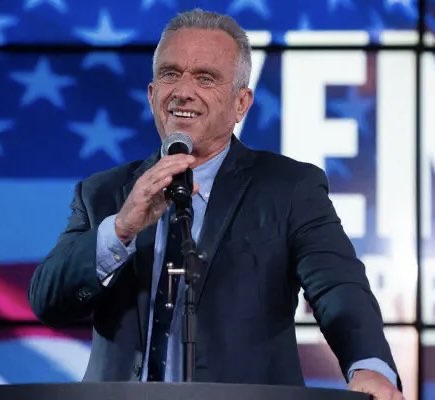
RFK Jr Is merely addressing the obvious. That is to say…that the Democratic Party of the Kennedy era is dead.
The Democratic Party’s strong stance on issues like climate change, identity politics, and social justice movements is a big departure from a broader, more unifying approach to governance that characterized the Kennedy era, where the focus was also on national unity and international prestige.
RFK Jr.’s perspective on the evolution of his Democratic Party reflects a significant shift in political ideology and focus from the era of his family’s prominence to the current landscape.
Here’s how discussions and his views encapsulate this transformation:
1) From Broad Unity to Specific Causes: The Democratic Party, during the Kennedy era, was often characterized by its emphasis on national unity, civil rights, and international leadership, albeit within the Cold War context. RFK Jr. suggests a departure from this broad, unifying approach. Today, the party has increasingly focused on specific issues like climate change, identity politics, and social justice, which, while crucial, might be seen as more divisive or niche in comparison.
2 Climate Change: While RFK Jr. acknowledges human-caused climate change, his approach diverges from mainstream Democratic policy by questioning the extent of government intervention and the framing of climate policies as potentially authoritarian. This stance contrasts with the Democratic Party’s current push for aggressive climate action, which he sees as overreaching or misprioritized.
3 Identity Politics and Social Justice: The modern Democratic Party’s emphasis on these issues represents a significant shift towards recognizing and addressing systemic inequalities, which wasn’t as explicitly articulated in the Kennedy era. RFK Jr.’s criticism might resonate with those who feel this focus has come at the expense of broader economic or national unity themes that once defined Democratic politics.
4 Criticism of Party Direction:
RFK Jr.’s decision to run as an independent and his critiques highlight a perceived loss of the Democratic Party’s traditional values, like skepticism towards big business (including Big Pharma and Big Tech) and government overreach. His views suggest a party that has moved away from its roots in working-class issues towards what he perceives as elitist or corporate interests.
5 Public Sentiment: Discussions on platforms like X (Twitter) reflect a mix of nostalgia for the Kennedy era’s perceived political style and criticism of the current Democratic Party’s direction. There’s a sentiment that the party has become less about the broad, unifying themes of progress and more about specific, sometimes polarizing issues.
6 RFK Jr.’s Positioning: His campaign and public statements aim to capture a disillusionment with both major parties, suggesting a return to a more centrist or libertarian approach where individual freedoms are paramount, contrasting sharply with what he sees as the Democratic Party’s current trajectory towards more regulatory and identity-focused politics.
In essence, RFK Jr.’s narrative and the discussions around his views illustrate a perceived shift in the Democratic Party from a platform that emphasized national unity and broad-based economic and civil rights to one that’s deeply engaged with specific, often progressive causes, which might alienate those who yearn for a return to what they see as the party’s original ethos. This evolution reflects broader changes in American politics where party identities have become more ideologically rigid and issue-specific.
Kennedys endorsement of Donald Trump represents a significant political alignment that has stirred considerable attention and conversation about the identity of the party and what the Democratic Party stands for nowadays.
 Jim Sullivan